
Sponsored By: 

My Plea:
‘It’s the little things that count’: helping doctors, nurses and other health professionals to better understand what it feels like to be a parent who has suffered the loss of a baby.
I am a Consultant Neonatologist and was recently appointed Professor of Neonatal Medicine. I have worked with premature and sick newborn babies for more than 25 years on the Neonatal Intensive Care Unit (NICU) in Newcastle. As a junior doctor, I was attracted to the NICU by the medical challenges of looking after babies: the complexity of newborn diseases, the technical skills required to insert drips or ventilator tubes, and learning how to keep tiny babies alive using modern life-support technology. Inspiring mentors and a desire to improve neonatal outcomes helped me develop a successful academic career focused largely on complex nutritional problems for which I now have an international reputation.

As paediatricians working in the NICU, every doctor knew some babies would not survive and felt sad when babies died: we were compassionate and could see the impact on parents, but we never really understood what it felt like. Twenty years after first stepping foot on a NICU, I was fortunate to develop a series of research projects with a team of sociologists and other university researchers looking at the parental experience. We spoke with parents whose babies had died and heard many sad, but also many inspiring stories, and identified many themes. In particular, we were confronted with the issue parents’ face when one baby from a twin/triplet pregnancy does not survive, but at least one other baby survives. Many parents told us how they felt when people spoke to them with all parents telling us words that they found especially hurtful, in particular the phrase “…at least you’ve still got one”.
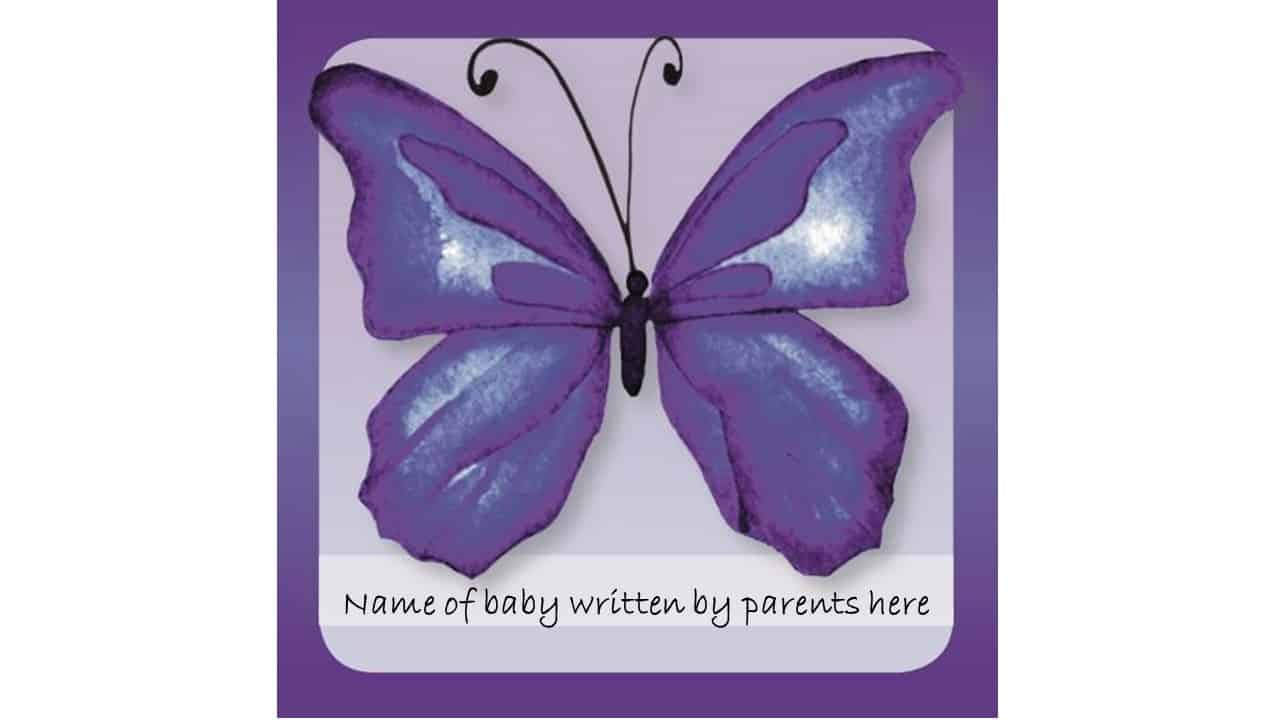
Our work was published in medical journals and presented at national and international conferences. Working with parents we developed the concept of the Butterfly cot card that has now been widely adopted not only across the UK, but also worldwide.
Whilst this ground-breaking research helped develop guidelines, I wanted to find a better way of letting health professionals hear parents’ stories first hand. In particular I was struck by the power of hearing parents speak and the things they talked about and remembered many years later, often with an emphasis on relatively small behaviours, words or actions that staff used or did. Parents didn’t expect us (as doctors) to be miracle workers, social workers, counsellors or psychologists, but they did always expect that we acted with kindness and humanity, and they appreciated even small expressions of empathy. To me, this is summed up with the phrase “…it’s the little things that count”: an opportunity to talk, an arm on the shoulder, remembering the baby’s name even many years later, and showing parents we understood how difficult this could be.
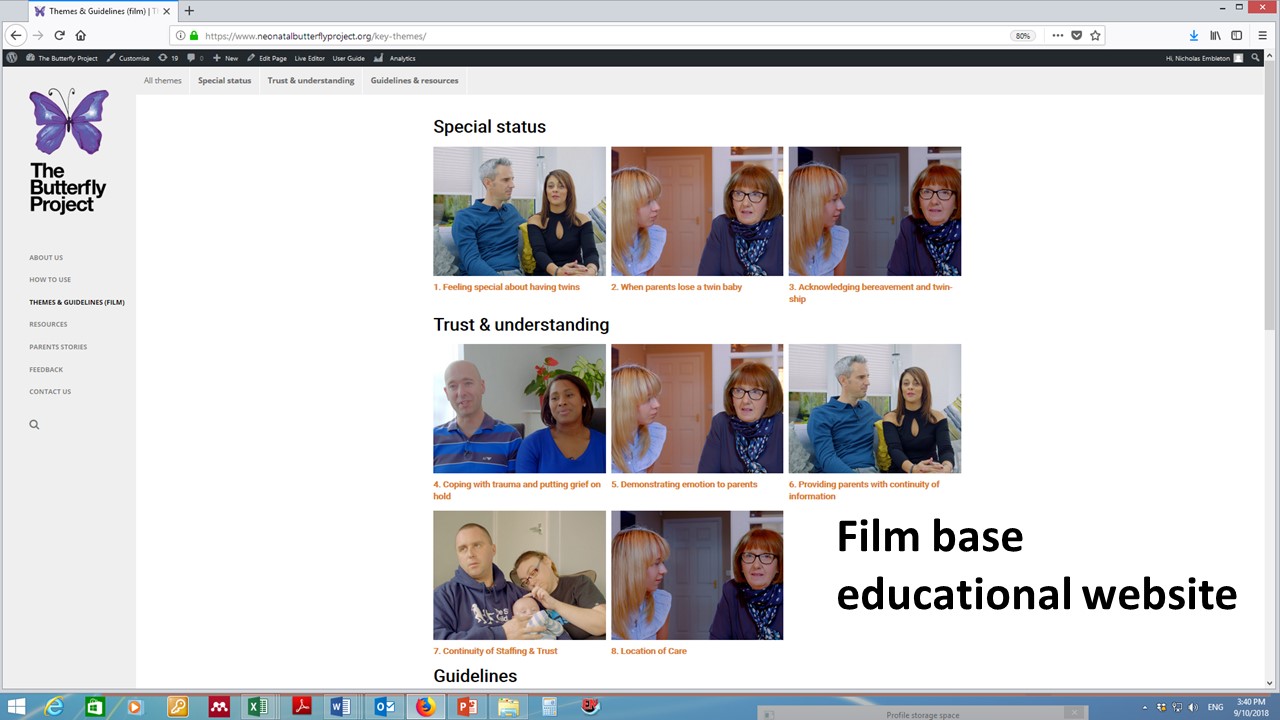
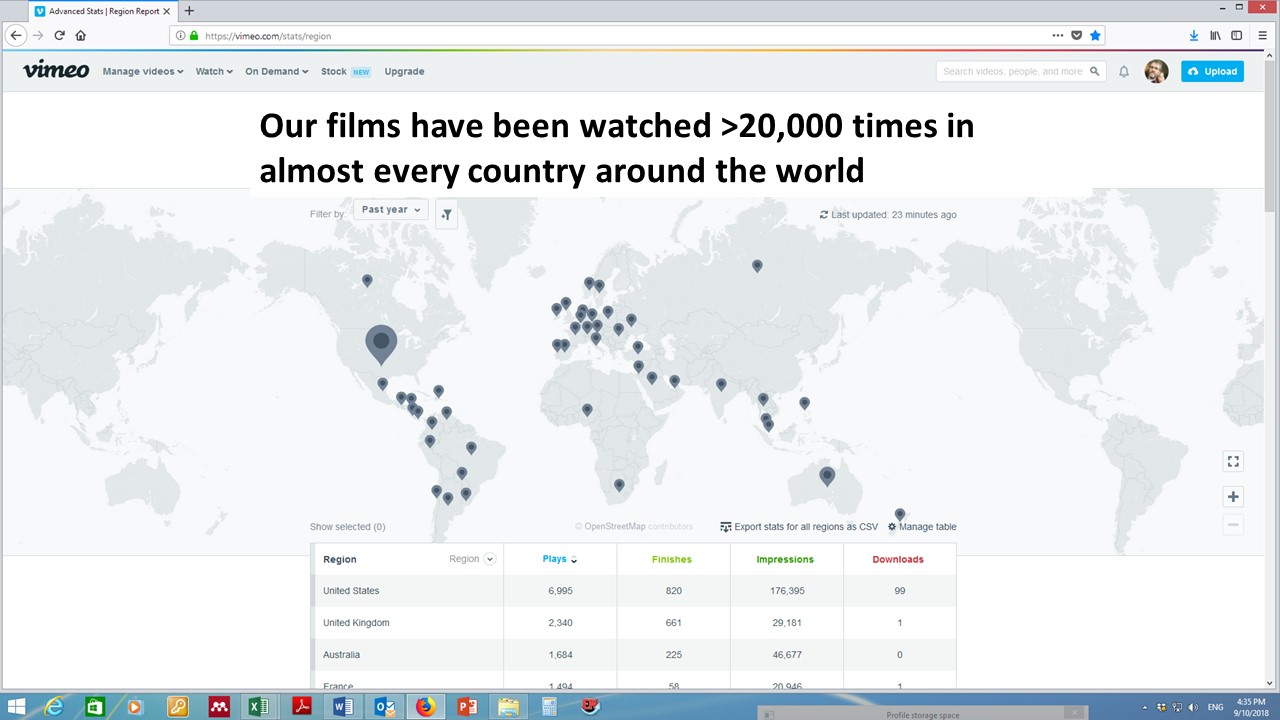
With further funding from our charity (Tiny Lives) we developed a film project with parents. I was fortunate enough to work with seven amazing families who I had met on the NICU, some more than 20 years ago. I am indebted to these parents, whose incredible braveness and honesty in sharing their painful stories about the loss of their babies have touched the hearts of everyone who has listened. We created a freely accessible bespoke educational website based around our research themes, and continue to work with these families to plan future projects. Our films have been viewed many thousands of times around the world and our guidelines translated into more than 10 different languages.
I am humbled to be nominated. I became a neonatologist because I enjoyed the technical and scientific aspects of practicing medicine with small and fragile newborn babies. I will admit that no one is more surprised than I am, to have arrived where I find myself now – trying to help other doctors and nurses better understand the feelings of parents whose babies died. I am immensely proud of our “Neonatal Butterfly Project” and indebted to all the researchers and staff who helped me – I am only nominated because of those teams. However, most of all, I see this nomination not for me, but for the parents of those babies, and especially those who felt able to give their time and emotional energy to help others better understand what it feels like. The Butterfly awards are for them.

——-
A short film made by the BBC and available on facebook is available here –
www.facebook.com/bbcnewcastle/videos/10155335913511279
Our main website can be found here www.neonatalbutterflyproject.org
The opening 7 minute film is available to the public, whilst access to the full website, guidelines, presentations, translations and all films requires a simple registration.
Professor Nicholas Embleton, August 2018
——–
What Others Have Said
Every now and again, a very special person comes into your life – that person is Nicholas Embleton. My daughter Sophie Proud was born 22 years ago, on his birthday actually. A sign of fate, I think. Sophie was 23 weeks gestation and weighed 750grams. Sadly, her twin sister, Beth died. During her 16 weeks in hospital, Nick spent far too many hours to count saving Sophie’s life, through many bouts of pneumonia, a blocked artery and a duct ligation. He remains a part of our lives to this day. Nick never gave up on Sophie when other professionals did, and indeed never will.
Please note – we used the Butterfly symbol as this was suggested to us by a bereaved parent during our workshop sessions in 2014; at the time we didn’t know about the Butterfly awards!
https://vimeo.com/229909459
?
Such worthy work done in this field. What’s not to like about saving the lives of these little miracles! ?
I now have two healthy seven year old nieces that I love dearly. All thanks to the great work by the doctors and nurses do in the RVI. It was very touch and go at first with one of the girls when they were born. It must be an awful situation when one of the siblings doesn’t make it. I can’t imagine how it feels for the parents ❤❤.
Keep up the good work. Thank you so much.
For the wonderful care given to my sister Laura Richardson with her pregnancy. Eva Rose Richardson was born just shy of 24 weeks and sadly died in January 2017. Her twin, Chloe Daisy was born 12 weeks later and survived thanks to the simply amazing medical skills from Nicholas Embleton.
A truly exceptional and special person
Fantastic idea to alert professionals to a family’s situation x
Nick is a wonderful, caring doctor who approaches his practice with real, genuine care and compassion. We will always be grateful for his care for our twins who are now 7 years old. The cup of tea and chat with a chance to ask all our questions was one of my abiding memories of the unit. A world class unit, a place for which we have eternal gratitude. A project such as this is invaluable, real world research that can directly help parents in desperate situation. It epitomises the ethos of the unit and my thoughts go out to the parents involved and those who will benefit from it
Fantastic doctor ..was my daughters doctor when she was born 1lb 4 she turns 16 next month and it’s all down to this man and his team
Nick is an amazing man! Thanks to him and the team of doctors and nurses at the RVI we were able to bring our son home. He was born at 24 weeks weighing just 700 grams, and was saved on more occasions than we can remember, but on 17th October 2002, at 28 weeks old Curt came home! Thank you Professor Embleton!
This doctor is amazing. He contributed to saving my sons life who was born with meconium aspiration full term. He needed ECMO and his support was exceptional. My boy is almost 15. We will always be thankful.
Truly amazing doctor who helped save our sons life when he suffered meconium aspiration full term. He needed ECMO and his support was exceptional. Our boy is 15 next week! We will always be grateful.
Nicholas Embleton looked after my very poorly daughter Ebony when she was born with hydranencephaly, unfortunately Ebony died when she was 24 hours old but the care she recieved was outstanding.
This amazing PROF and his team of fantastic nurses helped us so much when Amy and Will were born..the compassion, professionalism,care and comfort they showed us all during that scary time will live with us forever..helping arrange Wills funeral and not giving up on Amy or to us as bereaved new parents to a very premature baby. The follow up support Nick gave was done in the same way and he always remembers Amy’s name..that’s so lovely! Now he needs to extend his career into providing that same support for parents living with an academically advanced pre-teen miracle surviving twin with raging hormones, a massive heart and an attitude to match!! There’s a challenge for you PROF Embleton xxx
Truly amazing
I will never forget when Nick told me in January 2018 after I nearly lost my daughter – “hello grandma- he’s weeny but he is gonna be OK”. It was a vey tough time for Leo and my family however not as tough as it is for some families because not all babies make it. The support Nick gives these families using a technological development is inspirational. Good luck Nick – you and your team deserve to win !