
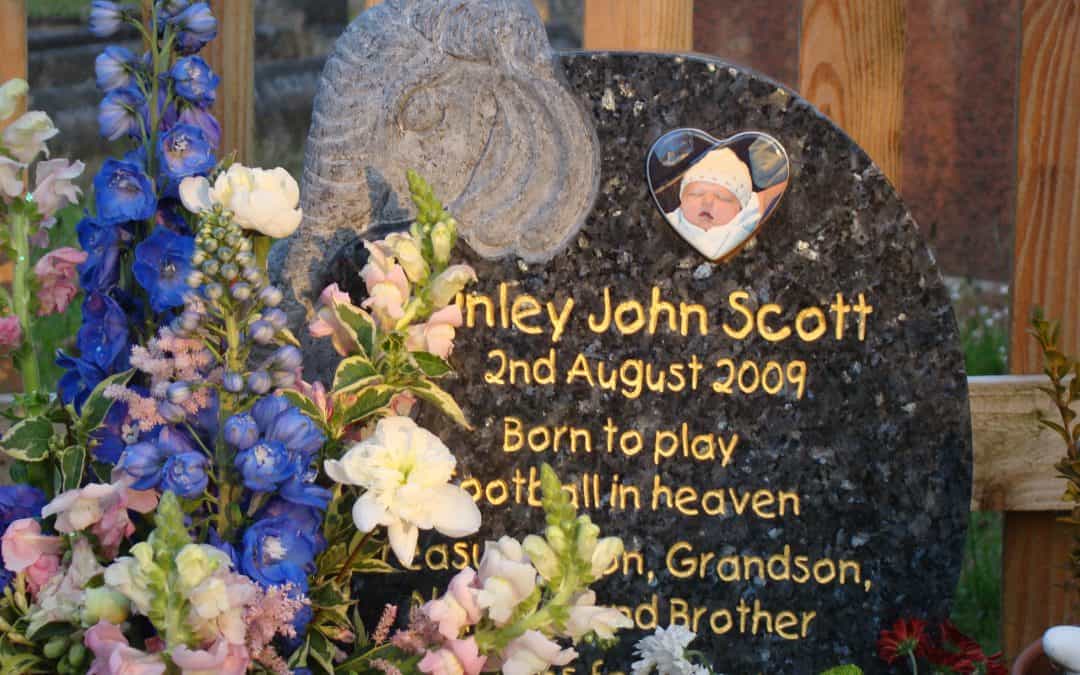
This week is maternal mental health week. It’s 9 and 10 years since I had my babies (the ones that fall within the “perinatal mental health period” anyway), but I still struggle with my mental health. It was a long time before I spoke or wrote openly about how bad things got. In fact, some things I still haven’t shared.
I think there is a huge crossover between babyloss and maternal mental health issues – and I think it is under recognised, poorly understood and under supported.
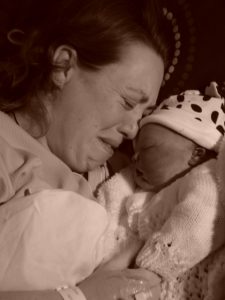
If you thought about the impact of the death of a baby, you’d think this moment would be the worst of it. The moment you meet your dead baby. The moment you stare death in the face. The moment you have to hear those words, repeated over and over because they just don’t make sense.
But for me that was only the beginning.
By that point, my brain had already learnt that the way you deal with hard stuff, is to switch off. To survive. To be practical. So I spent 3 days building memories with my baby. That was my motherhood. My maternal instincts were there. My baby was in my arms. But I was numb.
Even this moment, where my heart broke. Even then I was numb. I was crying because I hadn’t changed his nappy, not because he was dead. It was a long time before I came to realise exactly what dead meant.
I did what my heart needed. I held him, rocked him, read to him, dressed him. But I switched off.
And I left him.
The next few weeks were an odd combination of being busy and being disconnected. The awful decisions, the imagination about what was happening to him, the vivid sights that my brain couldn’t watch but later replayed to me in graphic, vivid detail.
I didn’t know then that I had PTSD. In fact it took 8 years for that to be recognised.

I was completely and utterly alone with my brain. I was alone at the graveside often. With my thoughts. Thoughts that I was powerless to stop. Thoughts about his body in the dark earth. Images about the coffin in the grave and me, in a last heart wrenching act, running back after the funeral to throw his blanket over his coffin in the cold earth. A blanket I meant to keep, but instinct took over. Thoughts about the cold. The damp. The dark. The animals. The urge to dig him up and bring him home.
Never spoken about. Never whispered. Never mentioned.
Not to the midwife. Not to the doctor. Not to the counsellor. Not to my Mum. Not to my friends. Not to my husband.

The weird routines that filled my time. Unable to break them, heartbreaking to do them. Switching the light on and closing the curtains in his bedroom every night. Opening the curtains every morning and saying good morning. Washing the teddies and the clothes, even though they weren’t worn and would never be played with.
For months. Knowing it wasn’t “normal”. Thinking it was “normal after babyloss”. Battling with the line of what was “normal for an abnormal situation” and what was “normal for me now”.
And the nights. The lonely, never ending night.
The quiet house.
The even quieter sobs.
The flashbacks and sensations flooding in every night because in the hospital it was never quiet, never dark so everything was stored in amongst the trauma. Inaccessible. Undiscoverable. Complex.
And at home it was too quiet and too dark.
Working myself to exhaustion, on everything and anything, in an attempt to be able to not notice the dark walk, past the unused nursery, to the cold bed. Ever hopeful that the exhaustion would keep away the dreams.
The beautiful dreams where I’d hear a baby crying, feel the weight of him in my arms, on my tummy. The dreams where I’d live out all the things that we should have been doing. And the nightmares where I would be frozen, able to see, but not to speak, buried alive. And the “not quite dreams” “not quite memories” where my body would wake cuddling a baby who disappeared the moment I opened my eyes, where my breasts would feel that they were feeding a baby who never nursed, where tears would roll down my cheeks, before I’d even woken because I knew what I would be waking up to, but I was powerless to stop it.
My grief/maternal mental illness included anxiety, avoidance, depression, hopelessness, drive, restlessness, flashbacks, intrusive thoughts, obsessions.
And I carried it alone.
This was my motherhood.
To be continued.